
How to A/B Test HDR Ads on LinkedIn Without Wasting Budget
To test an HDR ad cleanly, duplicate one proven creative and change only its luminance treatment. Run the SDR control and HDR challenger to the same audience under the same conditions, then compare attention, visit quality, and conversion metrics.
Start with one testable question
Ask whether selective HDR luminance improves the performance of a creative that already has a clear product, offer, and CTA. Do not simultaneously change the headline, layout, audience, and brightness. LinkedIn’s own testing guidance recommends isolating a single variable and rotating variations evenly during the test period.
Your control is the normal sRGB export. Your challenger uses the same pixels and composition, with only selected white highlights remapped into a Rec.2020/PQ HDR JPEG.
The Echo signal: 50% lower cost per visit
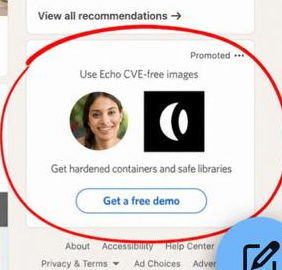
Echo Growth Lead Tomer Respezen reported that adding a glowing logo to the company’s LinkedIn Spotlight creative cut cost per visit by 50%. That result makes cost per landing-page visit a useful primary metric for this kind of experiment.
The creative places a compact white Echo mark on black inside a small Spotlight unit. It is exactly the kind of composition where a focused HDR highlight can separate itself from surrounding interface white without asking the entire ad to glow.
Build the control and challenger
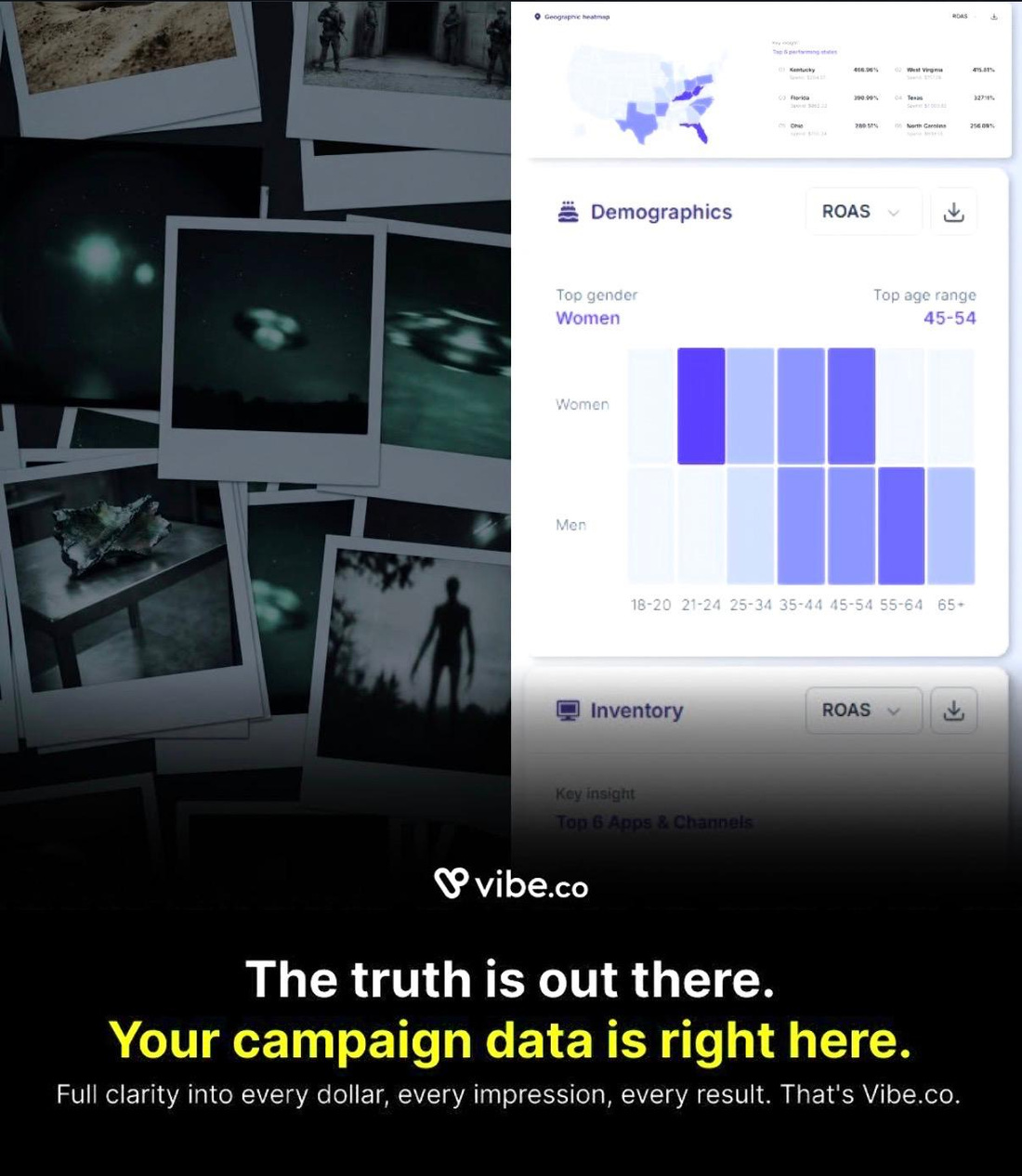
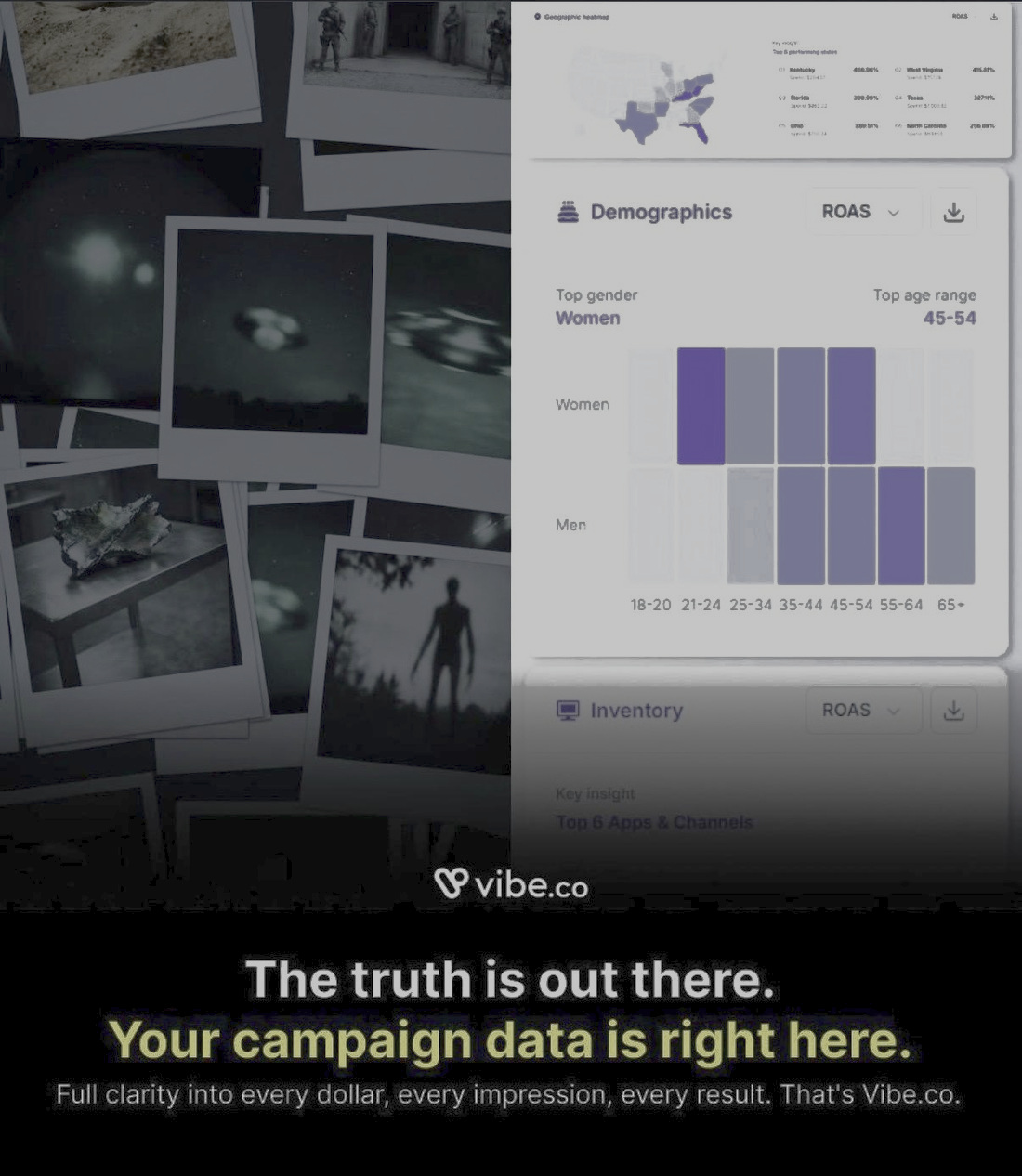
The Vibe campaign below is a useful reconstruction because the original artwork already uses bright interface panels against a dark photographic field. We kept the source composition unchanged and created a 1,200-nit HDR challenger from the supplied campaign capture.
The brighter version should still look like the same ad. If the HDR treatment changes the product color, lifts the dark background, or makes small text harder to read, lower the intensity or raise the highlight threshold before testing.
Run the experiment cleanly
Use the same campaign objective, audience, bid strategy, placements, schedule, copy, CTA, and landing page. Give both variations enough delivery to move beyond a handful of clicks, and avoid declaring a winner from the first day of volatility.
- Primary metric: cost per landing-page visit or cost per qualified visit.
- Attention metrics: thumb-stop rate, CTR, and engagement rate.
- Commercial metrics: conversion rate, CPA, revenue per session, and ROAS.
- Quality checks: bounce, time on site, new-customer rate, and device mix.
- Guardrail: confirm that the SDR fallback remains clear on unsupported screens.
Interpret the result like a growth team
A higher CTR with a flat conversion rate may mean the effect attracts curiosity without improving purchase intent. A lower cost per visit with stable or better conversion is more valuable. The best outcome is not the brightest ad; it is the variant that produces more qualified demand at an acceptable acquisition cost.
LinkedIn recommends running several active creative variations and replacing low performers as evidence accumulates. Treat HDR as a repeatable creative dimension: logo only, product highlight, offer card, or headline—one controlled test at a time.
Preserve the winning file
Download the HDR JPEG and upload that exact file. Screenshots, messaging apps, editors, and platform-side cropping can flatten the profile. Archive the original export and verify the published placement on a known HDR display before scaling spend.
Frequently asked questions
What did Echo report from its glowing-logo ad?
Echo’s Growth Lead reported a 50% reduction in cost per visit after using the glowing logo in a LinkedIn Spotlight creative.
What is the best KPI for an HDR ad test?
Use cost per qualified landing-page visit as an early signal, then confirm the result with conversion rate, CPA, revenue per session, or ROAS.
How many things should change in the test creative?
One: the HDR luminance treatment. Keep the layout, message, offer, audience, and landing page consistent so the result is interpretable.
Sources and further reading
- Echo Growth Lead campaign post (supplied screenshot)
- LinkedIn: display advertising best practices
- LinkedIn: A/B testing Sponsored Content
- LinkedIn: visual ad creative guidance